A large detailed map of Humberside, England
Explore Humberside with an interactive map featuring Street View, satellite and terrain views. Live weather, local news and location details for Humberside — plus links to detailed street maps for cities, towns, villages and hamlets across the county.
Humberside County Map
Map search is available for a limited number of queries per session to manage costs. Be specific — search precisely for best results.
| County Town | Beverley |
| Region | Yorkshire and the Humber |
| Country | England |
| Status | Former county (1974–1996) |
| Area | 3,512 km² |
| Population | 912,000 |
| Latitude | 53.5776 |
| Longitude | -0.4618 |
| Cities & Towns | 153 |
| Locality Maps | Locality Maps |
About Humberside
Flat horizons define the expansive, silt-heavy plains where the Humber estuary carves a persistent path toward the North Sea. Low-slung chalk ridges of the Yorkshire Wolds offer a quiet verticality to an otherwise level world, guarding the river’s northern bank against the biting maritime winds. Tidal waters churn with a restless, brown urgency, carrying the sediment of the Ouse and the Trent into the wide, grey expanse of the Wash. Reclaimed marshlands and sprawling salt marshes create a liminal space where the distinction between earth and tide remains perpetually blurred. Winter skies here are vast and bruised, casting long shadows across the drainage ditches that criss-cross this reclaimed, industrious geography.
Romans established the strategic foundations of Petuaria, recognising the immense logistical value of the river gateway long before medieval merchants transformed Kingston upon Hull into a thriving port. Viking incursions once rattled these shores, leaving behind linguistic echoes and a stubborn independence that persists in the local character today. Centuries of maritime dominance saw the town become a pivotal link in the global wool trade, later enduring the devastating aerial bombardment of the Second World War. Resilience emerged from the rubble, marking a transition from imperial trading hub to a modern gateway for European commerce. Layers of history remain visible in the weathered brickwork of the Old Town, where narrow alleyways still whisper of seafaring fortunes and naval ambition.
Agriculture provides the backbone of the inland districts, where fertile black soil yields heavy crops of wheat and sugar beet under the watchful eye of the Wolds. Heavy industry once dominated the riverbanks, with oil refineries and chemical plants forging a landscape of pipes and storage tanks that glow with an eerie, industrial luminescence at dusk. Fishing fleets, though diminished from their mid-century zenith, still influence the local economy, keeping the spirit of the trawler men alive in the bustling markets. Renewable energy projects now rise from the estuary floor, as wind turbine manufacturing replaces the soot-stained chimneys of a previous generation. This economic evolution reflects a pragmatic adaptation to changing global demands, ensuring the region remains a vital, working limb of the British economy.
Folks here possess a dry, unvarnished wit, forged by the bracing winds and the honest labour of the docks and the fields. Traditions linger in the quiet observance of regional festivals and the shared, communal pride in the local football clubs that unify disparate townships. Writers and artists have long been drawn to the stark, melancholic beauty of the estuary, finding inspiration in the interplay of light on the mudflats and the stoicism of the residents. Philip Larkin famously captured the unique, detached atmosphere of the region, immortalising the isolation and the peculiar, grey charm of the northern coast. Life moves with a steady, unhurried cadence, favouring substance over artifice and maintaining a deep, unspoken connection to the vast, tidal rhythms of the Humber.
Humberside Map — Towns and Main Roads
This detailed map of Humberside shows the county and district boundaries, the motorways and numbered A and B roads, the towns and villages, the national parks and Areas of Outstanding Natural Beauty, and the rivers and lakes. The inset shows where Humberside sits within England. Our page format reduces the display size for uniformity, and the smaller copy carries only the larger towns — here is a link to the full-size image, which shows far more and is easier to read.

Roads, water and boundaries © OpenStreetMap contributors (ODbL); settlements © Ordnance Survey Open Names, county and England outlines © ONS / OS, national parks and AONBs © Natural England — all under the Open Government Licence
Map drawn from data current at that date.
Humberside Maps
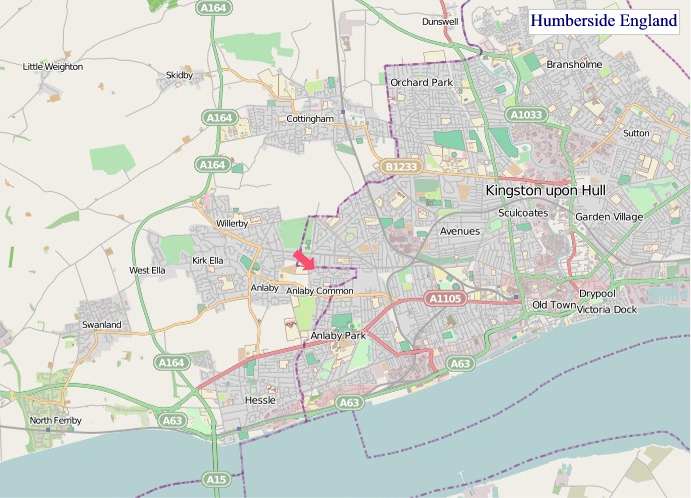
"© OpenStreetMap contributors, CC BY-SA".
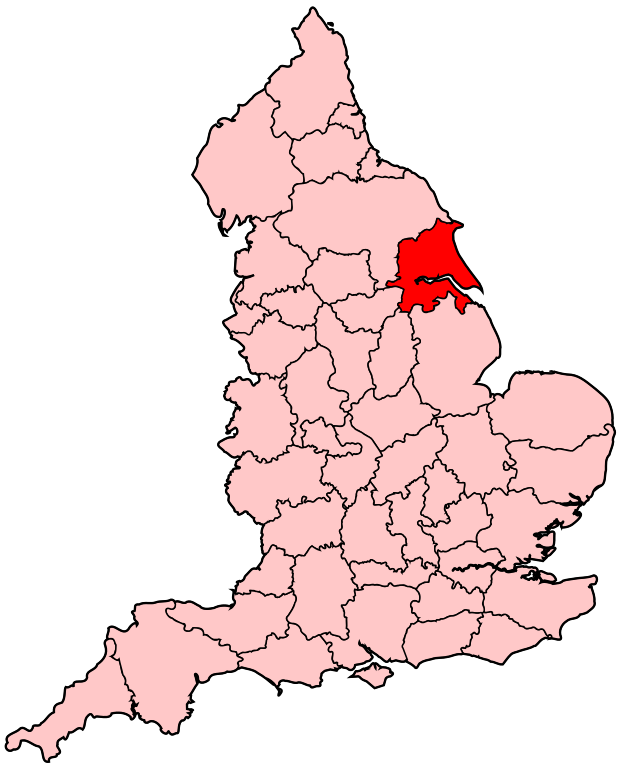
Humberside Location in England Map
Districts of Humberside 1974 to 1996 Map
_numbered.png)
The county was divided into nine non-metropolitan districts:
1 - North Wolds, renamed East Yorkshire in 1981
2 - Holderness
3 - Kingston upon Hull
4 - Beverley, renamed East Yorkshire Borough of Beverley in 1981
5 - Boothferry
6 - Scunthorpe
7 - Glanford
8 - Grimsby, renamed Great Grimsby in 1979
9 - Cleethorpes
From Wikipedia, the free encyclopedia
Humberside City and Town Maps
A
B
C
D
E
G
H
K
L
M
N
O
S
T
U
W
Humberside Maps — Interactive Map, Street View, Weather & News
This page provides an interactive Google map of Humberside, England with Street View, satellite and terrain views, alongside links to detailed street maps for cities, towns, villages and hamlets across the county. Humberside sits within the Yorkshire and the Humber region.
Every locality map page includes an embedded street and satellite map together with live weather where available — current conditions with hourly and 7-day outlooks powered by Open-Meteo. Local and world news feeds — including BBC News — keep pages current, and Wikipedia summaries provide additional local context.
The Search Maps button below the map opens OS Outdoor and the OS Explorer 1:25 000 sheets as base layers, with a labelled OS National Grid overlay, a distance and bearing tool, and a single-fix GPS readout giving your grid reference and latitude and longitude.
Location data is sourced from OS Open Names © Crown copyright and database rights 2024, Ordnance Survey, Open Government Licence v3.0, and verified by coordinates rather than name matching alone.