A large detailed map of Staffordshire, England
Explore Staffordshire with an interactive map featuring Street View, satellite and terrain views. Live weather, local news and location details for Staffordshire — plus links to detailed street maps for cities, towns, villages and hamlets across the county.
Staffordshire County Map
Map search is available for a limited number of queries per session to manage costs. Be specific — search precisely for best results.
| County Town | Stafford |
| Region | West Midlands |
| Country | England |
| Status | Ceremonial county |
| Area | 2,713 km² |
| Population | 1,136,000 |
| Latitude | 52.8690 |
| Longitude | -2.0606 |
| Cities & Towns | 921 |
| Locality Maps | Locality Maps |
About Staffordshire
Undulating ridges of the Peak District rise like the scarred spine of a dragon to define the northern reaches of this county. Rivers such as the Trent and the Dove carve deep, meandering paths through valleys of limestone and gritstone, feeding the verdant pastures that roll towards the Cannock Chase. Ancient woodlands cling to the slopes, where silence is broken only by the sharp cry of the buzzard or the scuttle of woodland creatures. Beneath this surface, the earth holds a complex geology that has dictated the rhythm of the land for aeons. Nature here remains a rugged, enduring force that commands respect from all who traverse its wilder edges.
Romans laid the foundations of urban life at Letocetum, marking the beginning of a transformation that saw this region become a crucible of conflict and commerce. Medieval kings and barons contested the soil, leaving behind the skeletal remains of Tutbury Castle to haunt the horizon with memories of royal intrigue. Industrial ambition later surged through the Victorian era, turning quiet hamlets into sprawling centres of invention and iron-willed progress. Each layer of history is etched into the very masonry of the towns, revealing a narrative of survival and relentless transformation. Such antiquity provides a sturdy anchor for a county that has witnessed the slow turning of centuries.
Potteries dominate the cultural and economic identity of the Five Towns, where the kiln-smoke of old once painted the sky in shades of soot and fire. Master craftsmen shaped fine bone china and earthenware, elevating humble clay into objects of international desire that bore the marks of Wedgwood and Spode. Agriculture continues to thrive in the peripheral shires, where dairy farming sustains a traditional connection to the fertile, stubborn soil. Mining once burrowed deep into the coal measures, providing the blackened lifeblood for a manufacturing engine that powered the nation’s growth. Modern enterprises now build upon this heritage of technical precision, ensuring that the legacy of innovation remains a vital, beating pulse.
Stoic inhabitants carry a temperament forged in the heat of the forge and the quietude of the meadow, blending a reserved grace with an unyielding work ethic. Writers like Arnold Bennett captured the distinct spirit of the Potteries, immortalising the grit and soul of the people within his vivid prose. Traditions linger in the folk music and local customs that bind the community together, honouring a way of life that values substance over hollow display. Artists and potters continue to practise their meticulous trades, passing down secrets of glaze and form through generations of diligent hands. Pride in this singular identity remains the hallmark of those who call these Staffordshire hills their own.
Staffordshire Maps
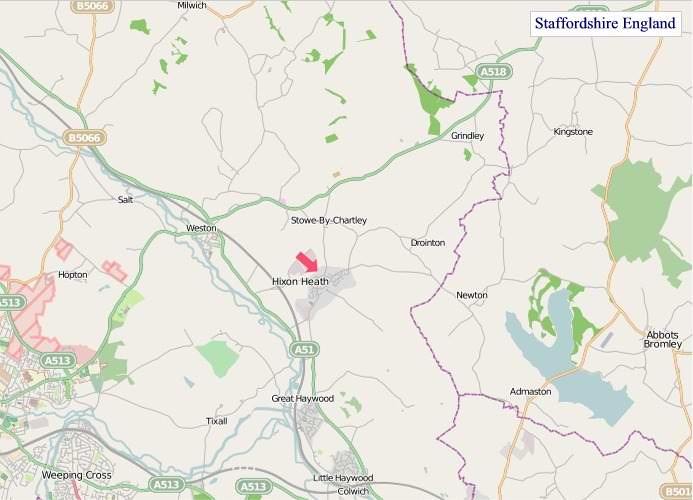
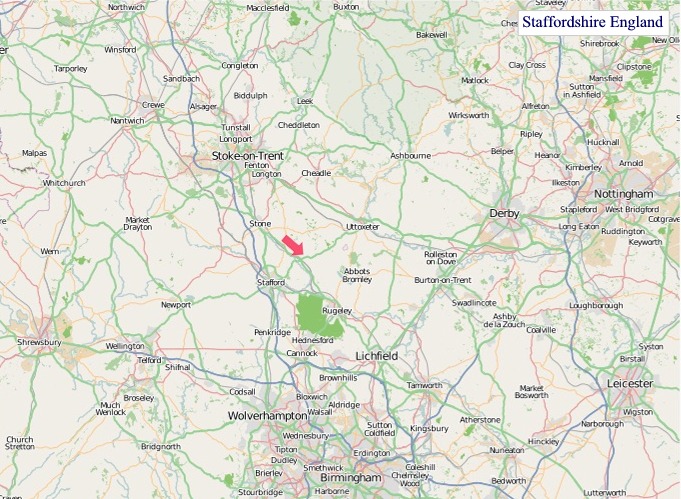
"© OpenStreetMap contributors, CC BY-SA".
Districts of Staffordshire
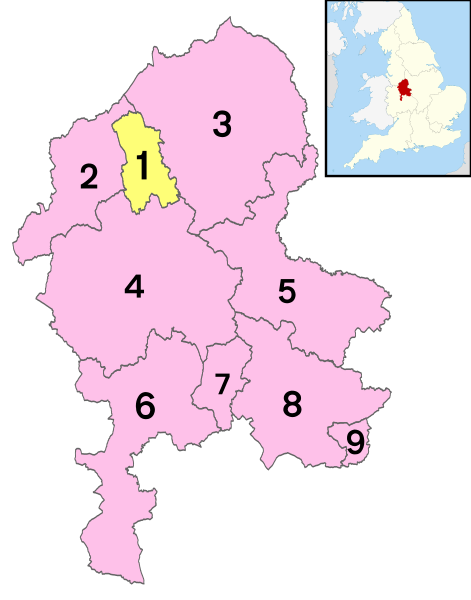
1 - City of Stoke-on-Trent
2 - Newcastle-under-Lyme
3 - Staffordshire Moorlands
4 - Stafford
5 - East Staffordshire
6 - South Staffordshire
7 - Cannock Chase
8 - Lichfield
9 - Tamworth
From Wikipedia, the free encyclopedia
Staffordshire City and Town Maps
A
B
C
D
E
F
G
H
K
L
M
N
O
P
R
S
T
U
W
Staffordshire Maps — Interactive Map, Street View, Weather & News
This page provides an interactive Google map of Staffordshire, England with Street View, satellite and terrain views, alongside links to detailed street maps for cities, towns, villages and hamlets across the county. Staffordshire sits within the West Midlands region.
Every locality map page includes an embedded street and satellite map together with live weather where available — current conditions with hourly and 7-day outlooks powered by Open-Meteo. Local and world news feeds — including BBC News — keep pages current, and Wikipedia summaries provide additional local context.
The Search Maps button below the map opens OS Outdoor and the OS Explorer 1:25 000 sheets as base layers, with a labelled OS National Grid overlay, a distance and bearing tool, and a single-fix GPS readout giving your grid reference and latitude and longitude.
Location data is sourced from OS Open Names © Crown copyright and database rights 2024, Ordnance Survey, Open Government Licence v3.0, and verified by coordinates rather than name matching alone.