A large detailed map of Oxfordshire, England
Explore Oxfordshire with an interactive map featuring Street View, satellite and terrain views. Live weather, local news and location details for Oxfordshire — plus links to detailed street maps for cities, towns, villages and hamlets across the county.
Oxfordshire County Map
Map search is available for a limited number of queries per session to manage costs. Be specific — search precisely for best results.
| County Town | Oxford |
| Region | South East England |
| Country | England |
| Status | Ceremonial county |
| Area | 2,605 km² |
| Population | 694,000 |
| Latitude | 51.7590 |
| Longitude | -1.2956 |
| Cities & Towns | 596 |
| Locality Maps | Locality Maps |
About Oxfordshire
Rolling chalk downlands and the verdant, water-meadowed vales define this inland county, where the Thames—here christened the Isis—meanders in liquid silver ribbons through the heart of the landscape. Ancient limestone ridges of the Cotswolds rise to the west, their honey-coloured stone walls tracing the contours of a rolling, pastoral theatre. Wychwood Forest still whispers of its wild, royal past, its tangled thickets offering a secret sanctuary for the deer and the badger. Rivers like the Cherwell and the Windrush carve gentle scars into the earth, nourishing the fertile soil and creating a tapestry of lush, emerald-hued floodplains. Oxfordshire remains a quiet kingdom of rolling horizons, where the sky seems wider and the clouds drift with a slow, deliberate grace over the sleeping hills.
Roman legions once trod the straight, uncompromising lines of Akeman Street, leaving behind the hushed ghosts of villas beneath the modern plough. Medieval spires of Oxford city soon pierced the skyline, marking the birth of a university that would anchor the intellectual life of the nation for centuries. Civil War skirmishes bloodied the fields around Edgehill and Chalgrove, leaving deep scars upon the collective memory of a county caught between crown and parliament. Blenheim Palace stands today as a baroque monument to a martial past, its vast, formal gardens echoing with the weight of Churchillian history. Centuries of human endeavour have layered themselves upon this soil, creating a palimpsest where every village church and stone cottage tells a story of endurance and change.
Agricultural rhythms dictated the pulse of the county for generations, with golden wheat and barley fields dominating the vast, open plains of the Vale of White Horse. Modernity arrived on the wings of innovation, transforming the silent plains into a bustling hub of high-technology manufacturing and advanced engineering. Cowley pulses with the metallic heartbeat of the motor industry, where precision machines continue to fashion the steel chariots of the twenty-first century. Science parks bloom like strange, futuristic flowers near Abingdon, housing the brilliant minds that push the boundaries of quantum physics and biomedical research. Prosperity flows through these avenues of industry, marrying the traditional husbandry of the land with the cold, gleaming promise of the digital age.
Scholars and poets have long sought refuge within the dreaming spires, their ink-stained fingers tracing the lines of profound verse amidst the cloisters and quadrangles. Traditions linger in the hearty, ale-scented air of village pubs, where the local dialect still carries the soft, rolling lilt of the southern shires. Figures such as Lewis Carroll and J.R.R. Tolkien walked these very streets, finding magic in the shadows of the Bodleian and the quiet banks of the river. Artistry flourishes in the small galleries and workshops of Woodstock, where craftsmen hone their skills with a patient, traditional devotion. People here possess a sturdy, understated pride, a temperament forged by the steady passage of seasons and the quiet dignity of a life lived in harmony with the weight of history.
Oxfordshire Maps
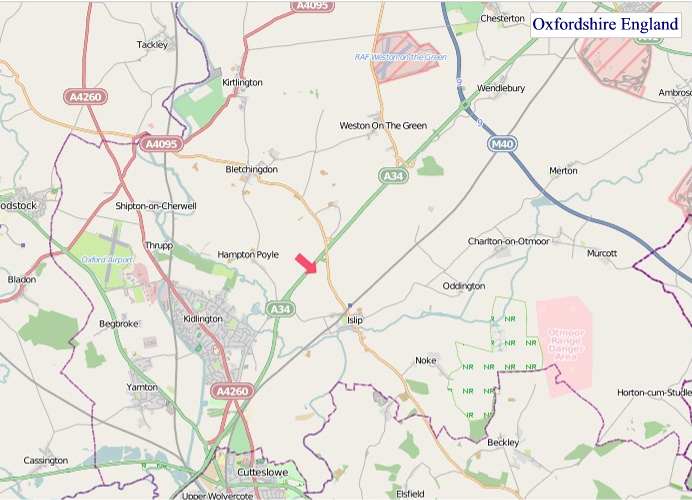
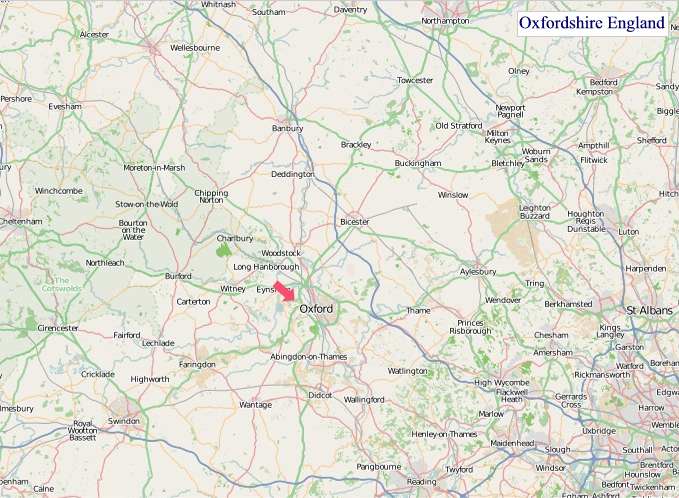
"© OpenStreetMap contributors, CC BY-SA".
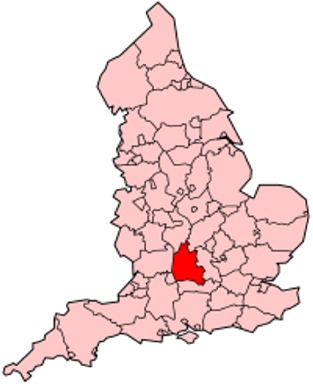
Districts of Oxfordshire County
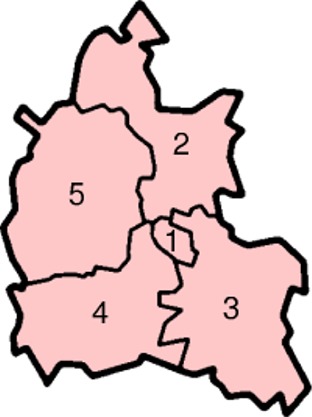
1 - Oxford
2 - Cherwell
3 - South Oxfordshire
4 - Vale of White Horse
5 - West Oxfordshire
From Wikipedia, the free encyclopedia
Oxfordshire City and Town Maps
A
B
C
D
E
F
G
H
J
K
L
M
N
O
P
R
S
T
U
W
Oxfordshire Maps — Interactive Map, Street View, Weather & News
This page provides an interactive Google map of Oxfordshire, England with Street View, satellite and terrain views, alongside links to detailed street maps for cities, towns, villages and hamlets across the county. Oxfordshire sits within the South East England region.
Every locality map page includes an embedded street and satellite map together with live weather where available — current conditions with hourly and 7-day outlooks powered by Open-Meteo. Local and world news feeds — including BBC News — keep pages current, and Wikipedia summaries provide additional local context.
The Search Maps button below the map opens OS Outdoor and the OS Explorer 1:25 000 sheets as base layers, with a labelled OS National Grid overlay, a distance and bearing tool, and a single-fix GPS readout giving your grid reference and latitude and longitude.
Location data is sourced from OS Open Names © Crown copyright and database rights 2024, Ordnance Survey, Open Government Licence v3.0, and verified by coordinates rather than name matching alone.